How To Take Professional Videos
Capturing professional videos goes beyond pointing a camera and hitting record. It’s a combination of storytelling, technical skill, and understanding your audience. Whether you’re filming a corporate video, a promotional campaign, or a social media clip, every frame matters.
This guide will walk you through the essentials, tips, and insider techniques to make your videos look polished, engaging, and professional.
Understanding the Role of a Professional Videographer
A professional videographer is more than someone with a camera, they are storytellers, directors, and technicians rolled into one. Their job is to turn concepts into visual experiences that captivate the audience. They understand how to manipulate light, motion, and sound to create a narrative that feels natural and immersive. Professional videographers don’t just record events, they craft experiences that resonate.
They anticipate how a scene unfolds and make decisions in real-time to enhance every shot. Whether working on a wedding, commercial, or documentary, their goal is to create visuals that communicate the intended emotion and message effectively.
Essential Equipment for High-Quality Video
Cameras: Choosing the Right Tool
Not every camera produces professional-quality footage. Your choice depends on the type of videos you plan to make. DSLRs and mirrorless cameras are versatile and offer excellent image quality. They allow manual control over aperture, shutter speed, and ISO, crucial for professional-looking footage. Camcorders, while less flexible, are reliable for long recordings and live events.
Consider sensor size, low-light performance, and 4K capabilities. Larger sensors capture more light, producing crisp and detailed footage, even in dim settings. If you’re filming in Spring Branch West, with its mix of natural light and indoor environments, a camera with strong low-light performance is a must.
Lenses: Making Every Shot Count
A lens can make or break your video. Wide-angle lenses capture entire scenes and are perfect for establishing shots, while telephoto lenses focus on details, expressions, or action at a distance.
Prime lenses, which have a fixed focal length, provide sharper images and beautiful background blur, making your subjects stand out. Using the right lens gives your video depth and a cinematic feel.
Stabilizers and Tripods: Smooth Motion
Nothing ruins professionalism faster than shaky footage. Tripods provide stability for static shots, while gimbals and handheld stabilizers allow smooth movement while walking or panning. Learning to move the camera smoothly is just as important as framing your shots, steady motion keeps viewers engaged and conveys expertise.
Microphones and Audio Gear
Audio quality is often more important than video quality. Even the sharpest video fails if the sound is poor. Lavalier microphones for interviews, shotgun mics for directional audio, and external recorders improve clarity. Using quality microphones ensures your voiceovers, dialogue, and ambient sounds feel immersive.
Mastering Lighting Techniques
Natural Lighting vs Artificial Lighting
Natural light can make scenes feel authentic, but it’s unpredictable. Filming at sunrise or sunset provides soft, warm tones, while midday sunlight can be harsh. Artificial lights give control over consistency and direction. LED panels, softboxes, and ring lights help balance light in any scenario. Combining both types of lighting creates a professional, cinematic look.
Three-Point Lighting Setup
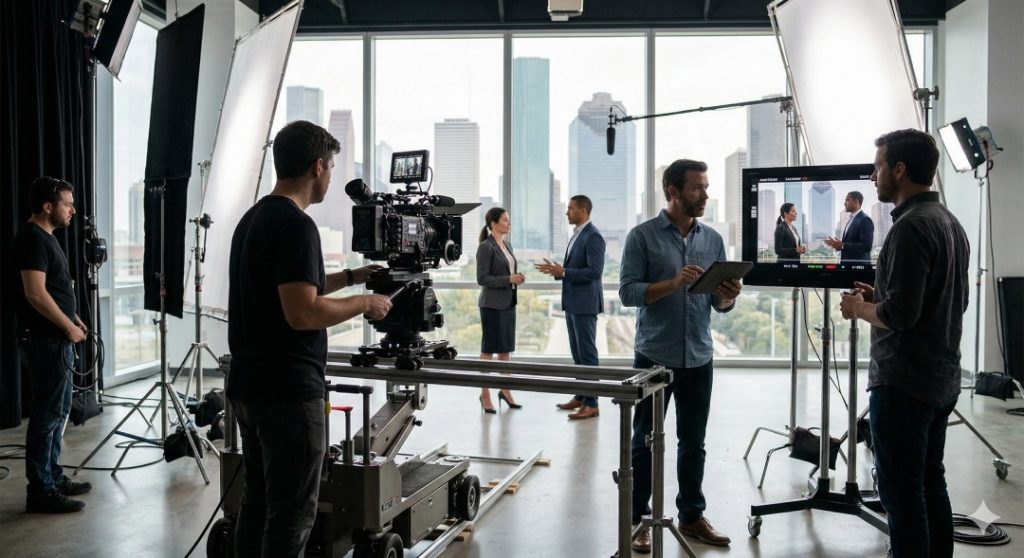
Three-point lighting uses a key light, fill light, and backlight. The key light illuminates the subject, the fill light softens shadows, and the backlight separates the subject from the background. This setup adds depth, dimension, and a polished look. Even a basic three-point setup can transform your footage from amateur to professional.
Composition and Framing Tips
Rule of Thirds and Leading Lines
Framing is crucial in videography. The rule of thirds divides the frame into a 3×3 grid, placing subjects at intersections creates balance. Leading lines, like roads, railings, or architecture, guide viewers’ eyes and enhance storytelling. Thoughtful framing adds narrative depth without extra effects.
Camera Angles that Tell a Story
Angles convey emotion. High angles can make subjects feel vulnerable, while low angles convey power. Eye-level shots create intimacy, and unique perspectives grab attention. Experimenting with angles and movement brings life to static scenes and emphasizes storytelling elements.
Understanding Exposure and Settings
Aperture, Shutter Speed, and ISO
Exposure controls how light interacts with your camera. Aperture affects depth of field, shutter speed affects motion blur, and ISO controls sensitivity to light. Using these settings intentionally creates mood, emphasizes subjects, and avoids overexposed or underexposed footage.
For instance, filming moving objects requires a higher shutter speed to avoid blur, while shallow depth of field keeps focus on your subject and blurs the background.
White Balance and Color Accuracy
White balance ensures your colors are true-to-life. Shooting in the wrong white balance can make skin tones look unnatural. Adjusting white balance manually or shooting in RAW allows flexibility in post-production for color grading.
Planning Your Video Shoot
Storyboarding and Shot Lists
Planning transforms ideas into structured visuals. A storyboard or shot list organizes scenes, ensures coverage, and saves time. It outlines framing, camera movement, and subject placement, giving your shoot direction.
Location Scouting in Spring Branch West
Scout your locations before filming. Check lighting, background noise, and accessibility. Spring Branch West offers urban landscapes, parks, and indoor spaces perfect for video. Understanding the environment helps plan shots, lighting, and camera angles efficiently.
Directing Subjects and Capturing Action
Posing, Movement, and Natural Reactions
Directing isn’t about stiff poses, t’s guiding your subjects to move naturally. Encourage interaction, gestures, and authentic expressions. Capture moments that tell a story, like a subtle smile, hand movement, or casual interaction.
Engaging Interviews and Testimonials
Interviews require trust and comfort. Ask open-ended questions that prompt storytelling rather than yes/no answers. Listen actively and guide the conversation to keep it natural. Comfortable subjects result in better visuals and compelling narratives.

Post-Production Basics
Editing Software Options
Editing is where your footage comes alive. Adobe Premiere Pro, Final Cut Pro, and DaVinci Resolve are industry standards. They allow you to cut, arrange, and polish footage, correct mistakes, and enhance storytelling with transitions, effects, and graphics.
Color Grading and Audio Enhancement
Color grading sets the mood and enhances visual storytelling. Adjust brightness, contrast, and color tones to create atmosphere. Audio enhancement removes background noise, balances sound levels, and ensures dialogue and music complement the visuals.
Adding Motion Graphics and Titles
Titles, lower-thirds, and subtle graphics add professionalism. Motion graphics highlight key information and reinforce branding, making your video visually appealing and easy to follow.
Common Mistakes to Avoid
Poor Audio Quality
Avoid relying on camera microphones. Invest in proper audio capture to prevent distractions. Clear audio keeps your audience engaged and conveys professionalism.
Shaky Footage
Unstable shots are distracting. Stabilize your camera using tripods, gimbals, or post-production software to maintain smooth motion throughout.
Overcomplicating Shots
Complex angles or excessive effects can confuse viewers. Focus on storytelling. Simple, well-framed shots often look more professional than overdone sequences.
Tips from Nightwolf Productions in Spring Branch West
Nightwolf Productions has years of experience capturing stunning professional videos in Spring Branch West. Their approach emphasizes careful planning, high-quality gear, and storytelling. They recommend focusing on lighting, audio, and subject interaction as the top three priorities. Even with limited resources, investing in these areas significantly improves video quality.
Sharing and Distributing Your Videos
Optimizing for Social Media
Tailor your video for each platform. Shorter videos with attention-grabbing openings perform well on Instagram and TikTok. Longer, detailed versions suit YouTube and company websites. Captions, hashtags, and optimized thumbnails increase engagement.
Website and SEO Considerations
Embed videos strategically on your website to boost engagement and SEO. Use descriptive titles, meta descriptions, and transcripts. SEO-optimized videos attract more viewers and enhance website credibility.
Nightwolf Productions Serving the Spring Branch West Community and Beyond in Houston
Nightwolf Productions is dedicated to serving the diverse needs of the local community of Houston, including individuals residing in neighborhoods like Spring Branch West. With its convenient location near landmarks such as The Branch School and major intersections like Sherwood Forest St. & Jardin Des Cir. (coordinates: 29.791083682822578, -95.58382038749744), we offer dental practice marketing videos Houston services.
Get Dental Practice Marketing Videos at Spring Branch West Now
Navigate from Spring Branch West to Nightwolf Productions Now
Mastering the Art of Professional Videography
Professional videography blends creativity, technique, and storytelling. Every choice, from lighting to camera movement, impacts how the audience experiences your video. Continuous practice, attention to detail, and learning from experts like Nightwolf Productions ensure your videos not only look professional but also tell compelling stories.
FAQs
1. Can I shoot professional videos with a smartphone?
Yes. Modern smartphones have high-quality cameras capable of 4K video. Pair them with stabilizers, external microphones, and proper lighting to achieve professional results.
2. How important is audio quality in professional videos?
Audio is crucial. Poor sound distracts viewers even more than shaky footage. Use quality microphones and audio editing tools for clear sound.
3. What’s the best lens for interviews?
A 35mm to 50mm prime lens is ideal for natural-looking interviews with a pleasing background blur.
4. How do I make videos look cinematic?
Control lighting, use shallow depth of field, experiment with angles, and color grade your footage. Smooth motion and proper framing enhance cinematic appeal.
5. Can Nightwolf Productions help beginners learn videography?
Absolutely. We at Nightwolf Productions offer guidance, practical tips, and hands-on experience for aspiring videographers in Spring Branch West.

Bring your vision to life with Nightwolf Productions! Contact us today for a personalized consultation and let’s create something extraordinary together.

Related News